

Contents
- The Monday That Isn’t Like Other Mondays
- Why the Body Comes Back Before the Mind Does
- The Attention You Spent Without Noticing
- Why the Same Desk Can Feel Different in September
- The Environment as Part of the Transition
- Recovery Doesn’t End at the Door
1. The Monday That Isn’t Like Other Mondays
Every Monday asks something of us. But the first Monday after a long summer break asks for something specific: a full switch from a schedule with almost no external demands to one with many, in the space of a single morning.
Most people assume the discomfort that follows is about discipline. Get back into the swing of things, and it passes. That’s partly true. But it understates what’s actually happening, physiologically and cognitively, in the days after returning to work after vacation.
The research on vacation recovery suggests something more specific: the reset happens, and it doesn’t last.
2. Why the Body Comes Back Before the Mind Does
Time off works. The evidence on this is consistent: vacation reliably improves health and well-being, with a moderate positive effect on how people feel. Exhaustion drops, mood lifts, and by most measures, people who take a real break are genuinely better off than before they left.
The complication is what happens next. The same body of research finds that these gains soon fade after work resumes, and a more recent replication puts a timeframe on it: well-being improvements largely disappear within the first week back. An older but more granular study of burnout found the decline happens in stages, partially by day three, and is complete within about three weeks.
This is worth sitting with, because it changes the question people usually ask. It isn’t “why didn’t the vacation work?” It did. The more useful question is why its effects disappear so quickly once ordinary work resumes, and what, if anything, can slow that down.
One explanation researchers point to is straightforward: recovery fades because the conditions that caused the original strain simply come back. A full inbox, a full calendar, and a full open-plan floor are not neutral facts. They are, in effect, the same stressors reasserting themselves, and the body responds accordingly, regardless of how rested a person was a week earlier.
3. The Attention You Spent Without Noticing
There’s a second, quieter mechanism at work, one that has less to do with mood and more to do with a specific cognitive resource: attention.
Psychologist Stephen Kaplan’s Attention Restoration Theory describes two kinds of attention. One is automatic and effortless, the kind engaged by watching clouds move, or leaves shift in the wind.
The other is directed attention, the effortful, deliberate focus required to write a report, sit through back-to-back meetings, or fight through a backlog of decisions. Directed attention depletes with sustained use, and certain kinds of environments help it recover, while others don’t.
A long stretch of unstructured summer days is, without anyone planning it that way, unusually rich in the conditions Kaplan describes as restorative. A demanding return to work is the opposite: a sudden, concentrated demand on exactly the resource that had just been given a rare chance to recover.
This is a useful reframe. The mental fog many people report in the first days back is a depleted resource being asked to perform at full capacity again, immediately, with no ramp-up period built in.
4. Why the Same Desk Can Feel Different in September
There’s a well-established model in occupational health, developed by Robert Karasek, that helps explain why the first weeks back feel disproportionately heavy. Job strain is highest when demands are high, and a person’s control over their own work is low; a stronger sense of control can buffer the effects of high demands.
September often produces exactly that combination.
Demands spike, because work accumulated in absence and deadlines cluster around the same return date across a whole organisation. Control, meanwhile, often dips, because a returning employee has less say over the shape of their first days back than over an ordinary week; the calendar has already filled itself in.
None of this means the desk has changed. It means the same desk, the same meetings and the same open floor are being met by someone with temporarily less attentional capacity and, often, less say over their own pace. That gap, not the calendar date itself, is what makes early September feel different from an ordinary Monday.
It’s worth being precise here: nothing in the current research suggests September carries a unique biological signature. What changes is the size of the mismatch between demand and readiness, and that mismatch is largest right after a break.
5. The Environment as Part of the Transition
If attention is depleted and control is temporarily reduced, the physical environment becomes relevant in a specific, limited way: not as a cure, but as a factor that can either widen or narrow that gap.
Daylight is one of the clearer examples. A controlled study of office workers found that those with more daylight and outdoor views slept 37 minutes longer per night and performed 42% better on cognitive decision-making tasks than colleagues with less daylight exposure. A separate study of daytime light in office buildings found that workers who received stronger light exposure in the morning fell asleep faster and reported better sleep quality. Neither study was designed around the return-from-holiday period specifically, but the mechanism, circadian regulation through light timing, is exactly what a shifted holiday sleep schedule disrupts.
Acoustic conditions tell a more nuanced story. Research on open-plan offices has found that a lack of privacy contributes more to overall dissatisfaction than noise itself does. Interestingly, a separate experiment found that noise-cancelling headphones made people feel more in control and more satisfied with their acoustic environment, without producing a measurable improvement in actual task performance. That gap between how in control someone feels and how well they objectively perform is a caution against oversimplifying: comfort and productivity aren’t always the same thing, and design that only addresses one may miss the other.
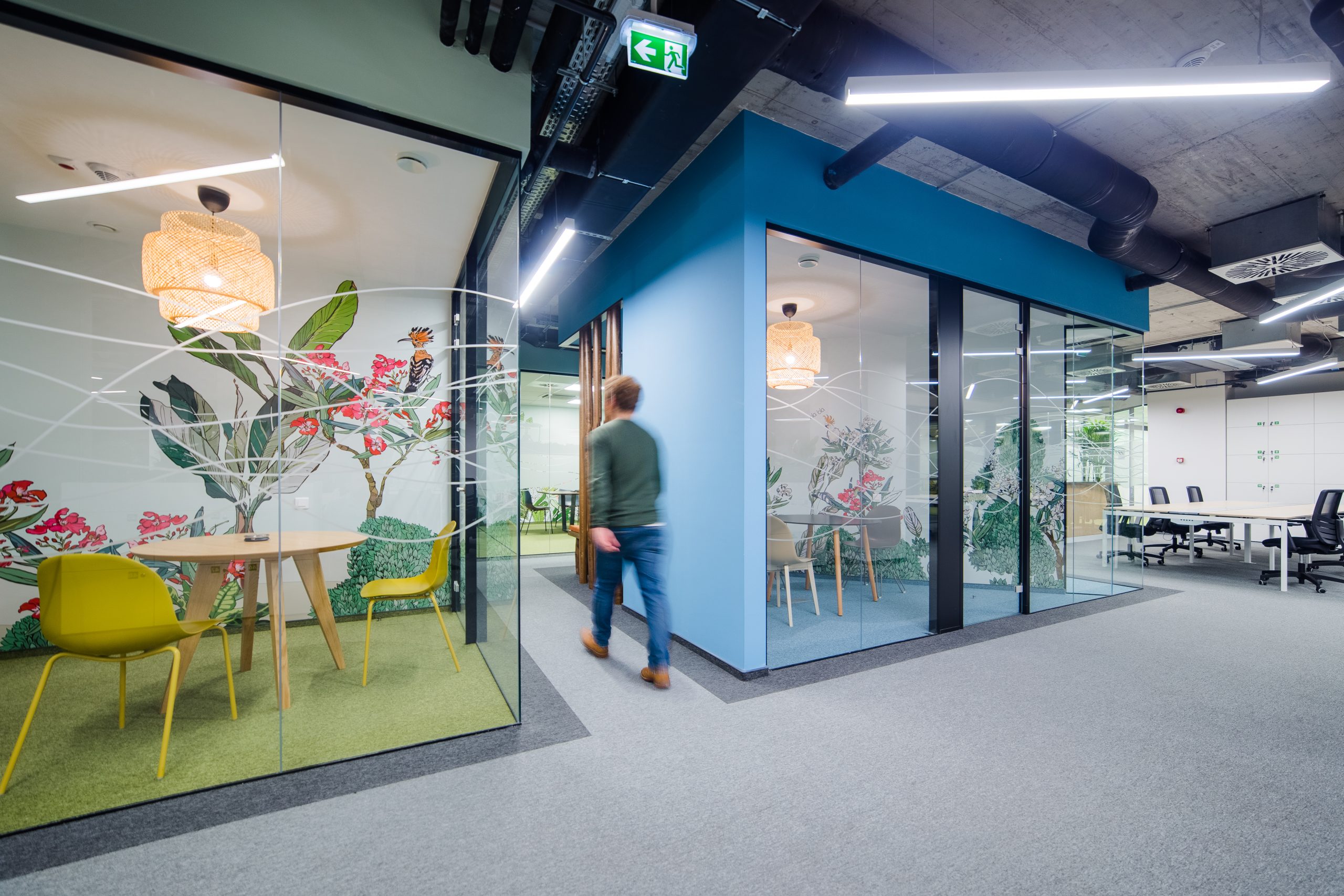
None of this argues for a specific renovation. It argues for something narrower and more honest: an environment that already offers daylight, some acoustic privacy, and small amounts of personal choice over where and how to work gives a returning employee a slightly shorter path back to full capacity.
An environment that offers none of these adds friction on top of a transition that is already, by the body’s own evidence, temporarily under-resourced.
6. Recovery Doesn’t End at the Door
The most useful shift in thinking here isn’t about vacations at all. It’s about recovery itself. Most organisations treat it as something that happens outside work and finishes the moment someone walks back in. The research reviewed here suggests otherwise: recovery is a process with its own pace, and the first two or three weeks back are still part of it, whether an organisation acknowledges that or not.
That implies how workplaces are thought about. A space built entirely around sustained, uninterrupted productivity offers nothing extra during a transition window, and in fact tends to demand the most exactly when a person’s capacity for it is lowest.
A space that also allows for daylight, a degree of acoustic control, and some choice over pace gives people a way to regulate their own re-entry, gradually, rather than being asked to arrive back at full output on day one.
Environments rarely fix a transition on their own. But they can make it noticeably harder, or noticeably easier, and that difference tends to show up long before anyone thinks to look for it.
Is your own workplace narrowing that gap in September, or widening it?
At Morphoza, this is the layer of a project we keep returning to: not just how a space performs under ordinary demand, but whether it gives people room to close the gap between what work asks of them and what they’re actually ready for, in the weeks that gap is at its widest.
Share: