

Factories Are Investing Millions in Production. Employees Are Still Eating Lunch in Spaces That Look Like 1992.
For years, industrial companies kept making the same mistake.
They invested heavily in automation, technology, and high-performance production lines, while completely ignoring the spaces where people actually spend their day.
Factories were becoming smarter.
Offices and employee areas remained stuck in the past.
Old chairs.
Cold lighting.
Cafeterias with zero personality.
Workspaces sending the same message: production matters more than people. But in the meantime, the labor market changed.
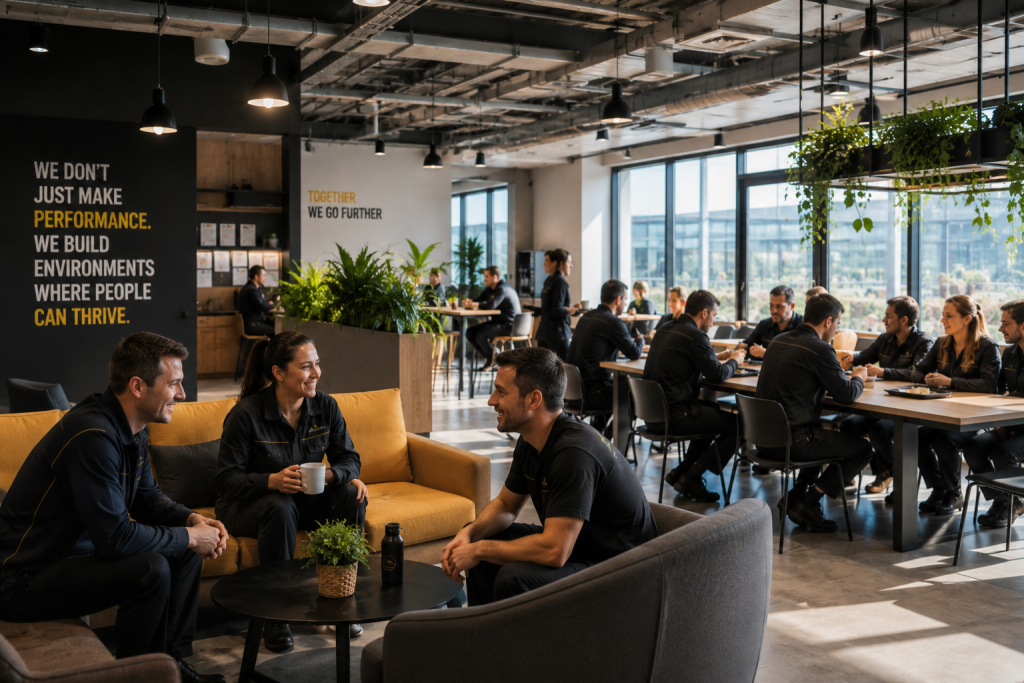
Today, employer branding is no longer just about competitive salaries or LinkedIn posts. People compare the entire work experience. They compare the energy of a place. They compare the environment where they spend eight or nine hours every day.
And that has completely changed the way modern factories are designed.
Case Study: Employer Branding Starts in Employee Spaces
A recent award-winning project illustrates this shift very clearly. At first glance, the objective sounded purely technical: creating the world’s first zero CO₂ emissions office for a tire factory.
But the real goal wasn’t just sustainability. It was attracting and retaining the right people.
The company understood something simple: you can’t build the factory of the future with employee spaces that still feel like the past.
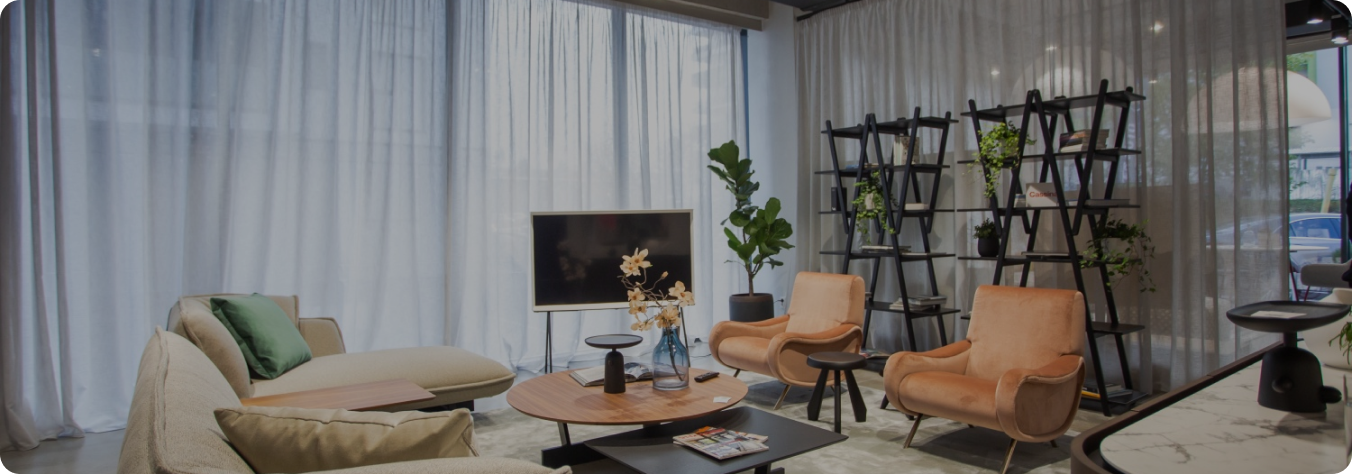
As a result, the office wasn’t designed as a standard administrative building, but as a direct extension of the company culture. A space capable of communicating values without relying on slogans printed on walls.
Everything was built around the human experience.
- Natural light.
- Warm materials.
- Textures inspired by Nordic design.
- Real collaboration areas.
- Spaces where people genuinely want to spend time.
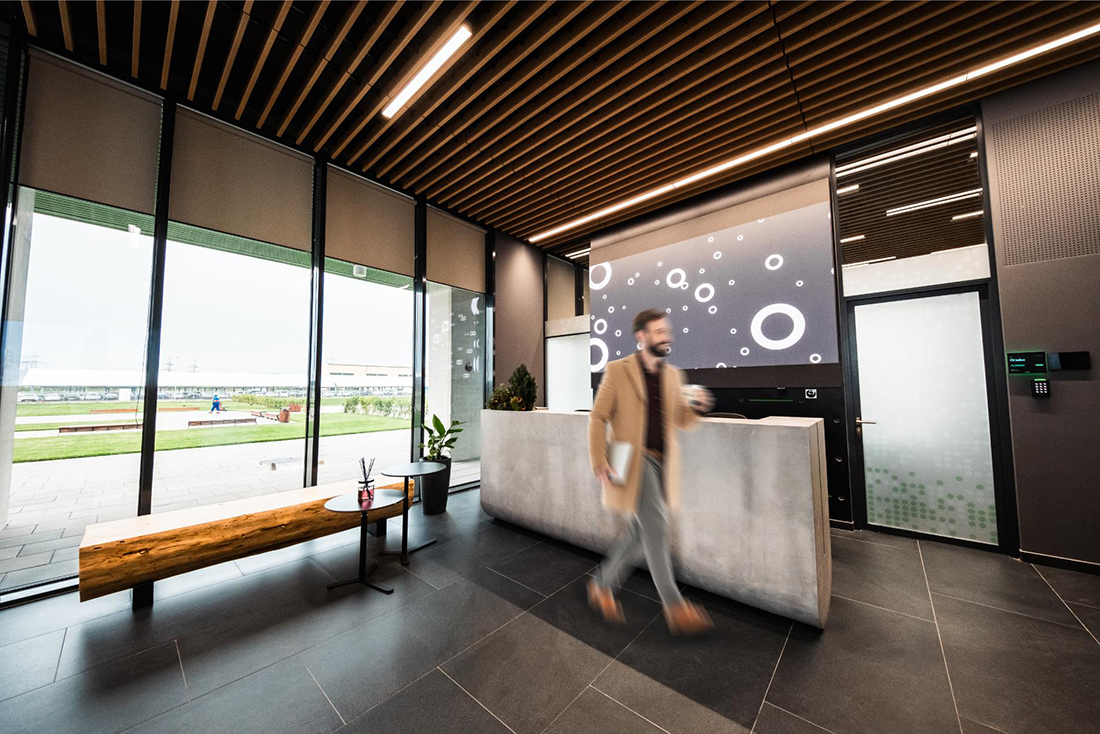
The entrance includes a natural tree integrated into a circular seating area.
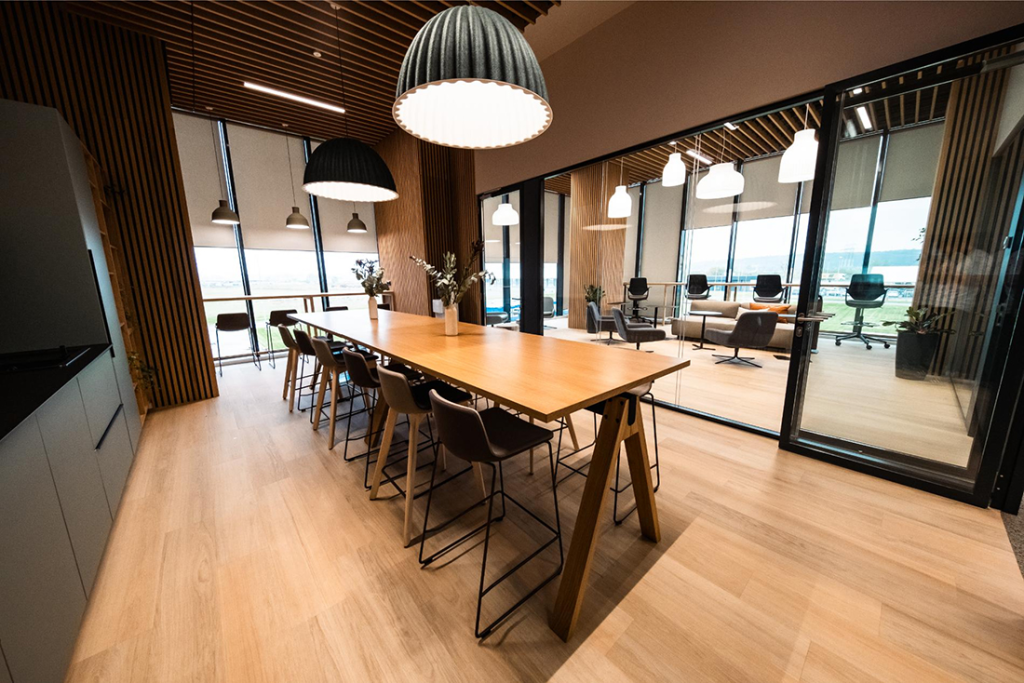
The shared kitchen functions more like a social hub than a simple cafeteria.
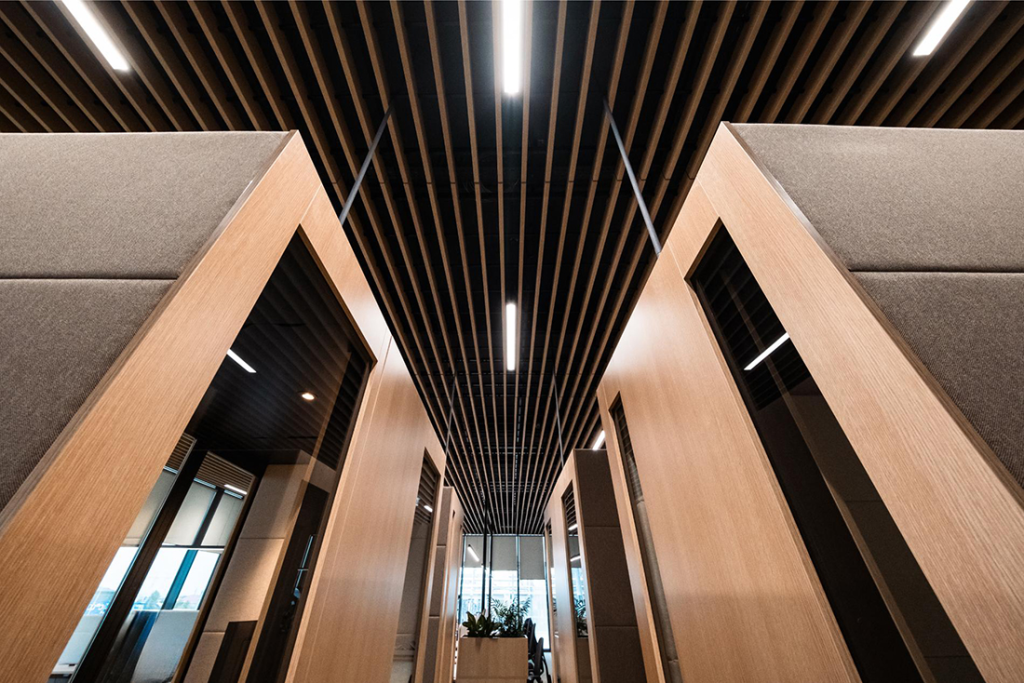
Work areas use acoustic materials, ergonomic furniture, and biophilic elements designed to reduce stress and mental fatigue.
All of these details communicate the same message:
“We care about how people feel here.”
And that is exactly what the new generation of employees is looking for.
How Industrial Design Influences Employee Experience
For a long time, concepts like employee experience and workplace design were associated almost exclusively with tech companies.
But industrial design is quickly catching up.
Because the reality is simple: when a competitor invests in better working conditions, people notice immediately.
And the differences are no longer subtle.
A well-designed workspace can directly influence:
- employee retention
- team energy levels
- recruitment speed
- company perception
- internal culture
Especially in a context where younger generations choose employers based on company values, sustainable offices have become part of employer branding strategies.
Sustainability is no longer just PR. It has become a clear signal of organizational culture.
A sustainable, bright, and thoughtfully designed office communicates that a company invests long-term in people, not just machinery.
Why Sustainable Offices Became a Competitive Advantage
Most industrial companies still treat employee spaces as a secondary expense.
But people build their perception of a company through very concrete experiences:
- What does the workplace look like?
- How does the lighting feel?
- Where do employees drink their coffee?
- Does the space feel energizing or exhausting?
Employer branding doesn’t start on LinkedIn. It starts during lunch break.
And projects like this clearly show where the industry is heading: the factories of the future will not compete through technology alone, but through the experience they offer people.
Because ultimately, the best talent chooses places where they feel valued.
Share: